How Game-Based Learning Boosted My 1st Grader’s Math Skills
How Game-Based Learning Improved My 1st Grader’s Addition & Subtraction Skills
( A real story from a parent and developer)
How do your kids study math at home?
My second child, when he was 7 years old (right before entering 1st grade), absolutely hated math worksheets.
He relied on his fingers and toes to solve even simple addition and subtraction,
and it often took him more than 10 minutes just to finish one page of a workbook.
But then something surprising happened.
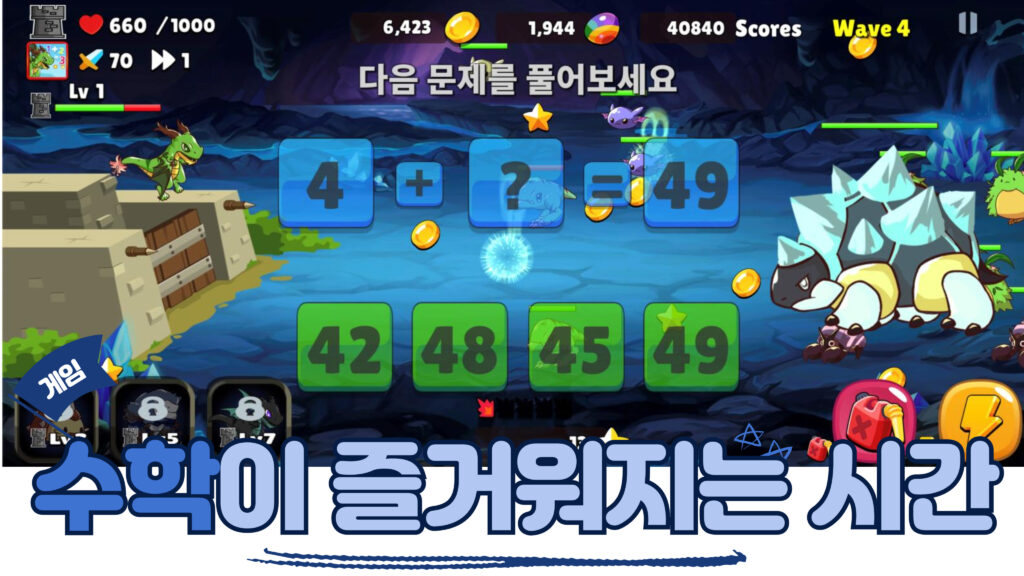
I let him play a math-learning game that I personally created (Math Game – DragonMath) for just a few days…
His math skills skyrocketed.
Today, he is in 2nd grade,
but he is already able to solve 5th-grade level math problems without difficulty.
Repeating calculations through gameplay dramatically improved both his speed and accuracy.
Honestly, even I didn’t expect the improvement to be this big.
Why “Learning Through Play” Works So Well
When kids are given a workbook, their reactions usually look like this:
Twisting their bodies
Unable to focus
Complaining it’s boring
“Can I watch YouTube instead…?”
But when math problems naturally appear inside a game, their attitude changes completely.
o Solving problems = a required action to continue the game
o Correct answers = rewards → character growth → internal motivation
o Wrong answers = fewer rewards → encourages focus
o Repetition becomes effortless and fun
This system turns children from “learners” into players.
As a result, they repeat calculations again and again—
and at some point, their math ability suddenly jumps.
That’s exactly what happened with my son.
The Actual Change — From Finger Counting to a “Calculation Machine”
At first, he was slowly working through even the basic levels of a workbook such as Soma Math or similar.
But after just a few days with the math game:
Addition & subtraction speed → 5× faster
Finger-counting → almost gone
One page of problems → finished in seconds
Calculation mistakes → dramatically fewer
Fear of math → completely gone
Sometimes he even turns on the game by himself to solve problems(!)
Now he is in 2nd grade,
but can handle many 5th-grade level problems with no trouble at all.
To summarize in one sentence:
“If kids practice calculations through a game instead of a workbook, the improvement is dramatic.”
Both I and my wife were genuinely impressed.
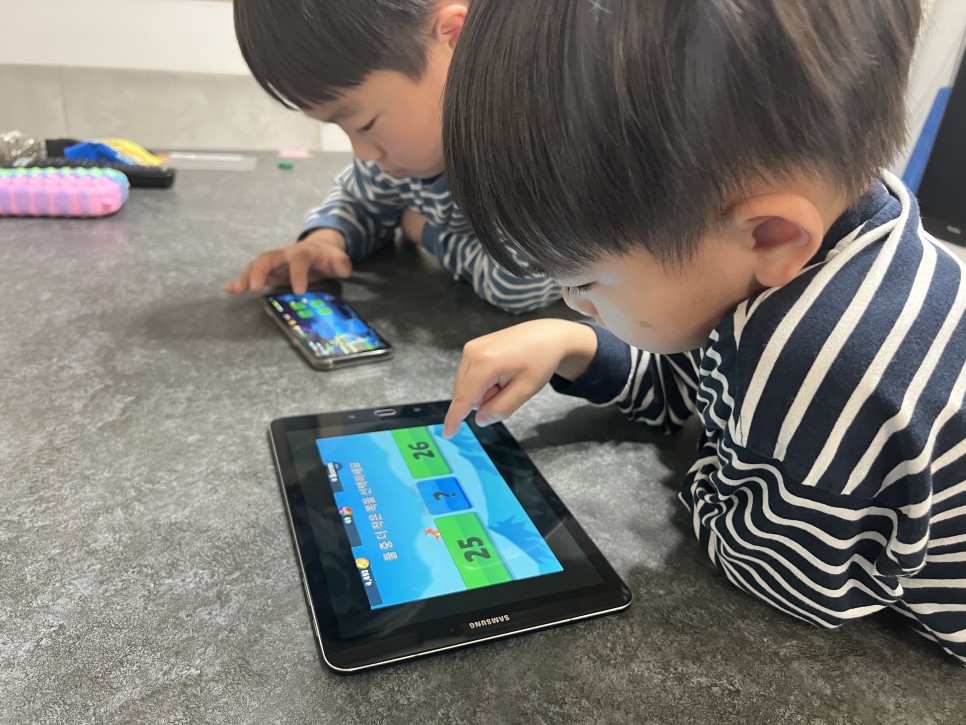
o The Key: Learning Works Best When Parents Play Together
Here is one very important tip:
o Don’t just hand your kid a tablet and let them play alone.
They will quickly drift off to YouTube or something else.
o Sit next to them and play together.
Take turns solving problems
Compete for high scores
Check mistakes together
Praise them immediately when they succeed
Instead of saying
→ “Do your homework,”
try saying
“Let’s play a math game together!”
It completely changes the atmosphere.
Kids accept it as “play,”
which naturally leads them into learning mode—
and that’s where the magic happens.
About the Math Game I Created — “DragonMath”
I actually developed this app for my own kids.
When I saw the price of big-name educational programs, I said:
“A monthly subscription for this? Forget it—Daddy will make one.”
Here’s what the app includes:
Learning Level
Covers kindergarten ~ 2nd grade (ages 6–10)
Equivalent to basic levels of typical Korean workbooks like SomaMath, Miracle Calculation, etc.
o How It Works
Kids play mini-games while answering math questions
Correct answers give in-game rewards for character upgrades
Wrong answers give no rewards → encourages focus
A dedicated “Study Mode” is also available
o Why It Works
Much more fun than workbooks
Encourages repetitive practice naturally
Helps kids who rely on fingers for counting
Boosts both speed and accuracy
Allows friendly competition with ranking features
For parents who know how boring traditional workbooks are,
this game will feel like a breath of fresh air.
A Quick Peek
(Insert images here if you want)
Kids who run away from worksheets after 10 seconds
will sit down for 30 minutes straight if it’s a game.
As a parent, this feels like a miracle.
o Gift Coupon
Inside the game, enter this code:
DragonMath
And you’ll receive 300 premium currency for free.
o Download Link
Final Thoughts
Addition and subtraction in 1st grade are the foundation of all future math concepts.
But getting kids to repeat calculations using workbooks is extremely difficult.
Because they simply don’t enjoy it.
That’s why I believe the best method is to let children learn
in the way they enjoy the most.
Game-based learning works incredibly well.
My son proved it.
And I hope your children can experience the same growth.
Thanks for reading